
The Pivot
The moment the camera stopped being an object of desire and, instead, became an instrument of consequence.

The Trojan Marching Band was hands down the best-sounding college band in the United States — in the world—with its musicianship stemming from the faculty’s ability to recruit players (including the conscription of scholarship kids) from the best music school west of Juilliard, Curtis, Berklee, or Oberlin. In those days, if you wanted to be a Hollywood filmmaker, a philharmonic musician, or, anywhere west of Chicago, an NFL football player, USC was the place to kick off your career.
The Trojans’ marching formations on the gridiron, however, were far less than exceptional, despite the fact that those of us who were indentured servants, the scholarship kids with “2-S” student draft deferments, did more drill practice than the kids we derided for joining the Army ROTC. The Vietnam War was raging, and my crowd was influenced less by John Wayne in The Green Berets (1968) than by Donald Sutherland in M*A*S*H (1970). A full metal jacket, we joked, was the breastplate worn with our Bronze Age band uniforms, molded plastic actually, referring to a military rifle bullet. Much later, 1987, Stanley Kubrick used the phrase as the title of his third anti-war film.
Because hundreds of thousands of students were marching in the streets and on campuses nationwide to protest the war and support the Civil Rights Movement, some of us in the band resented the cheerleading rah-rah-sis-boom-bah “Spirit of Troy” that we were obliged to demonstrate at every NCAA and Pac-8 basketball and football game. But we were satisfied that each of us got a two-ticket perk per game that we were happy to liquidate—to buy beer.
In late October 1969, not long after I began my freshman year, the Trojan Band was headed to San Francisco for our first road trip of the season, to perform at halftime for a football game pitting USC against the Cal Bears in Berkeley. More than a hundred of us were lined up at the United Airlines ticket counter at LAX collecting our boarding passes, hefting trunks holding big bass drums, the broad brass bells of sousaphones, and smaller instrument cases. The only thing too big to take with us was Traveler, a steroidal white stallion that galloped out to the fifty-yard line at home games during halftime, reared up on its hind legs, and whinnied while its rider, costumed in Cardinal & Gold replete with plumed headgear, billowing cape, and leather greaves, brandished a sword skyward to the stirring strains of Fight on for ol’ SC, Our men fight on to victory… Think Roy Rogers meets Homer. The poet, not Simpson.
We Trojans had a price on our heads. When marching to a drum cadence from the band room to the Coliseum for football games, UCLA students waited for us at the entrance to a pedestrian underpass on Exposition Blvd., where they could reach down and try to yank off our helmets. Trojan helmets fetched a good price from Bruin alumni.
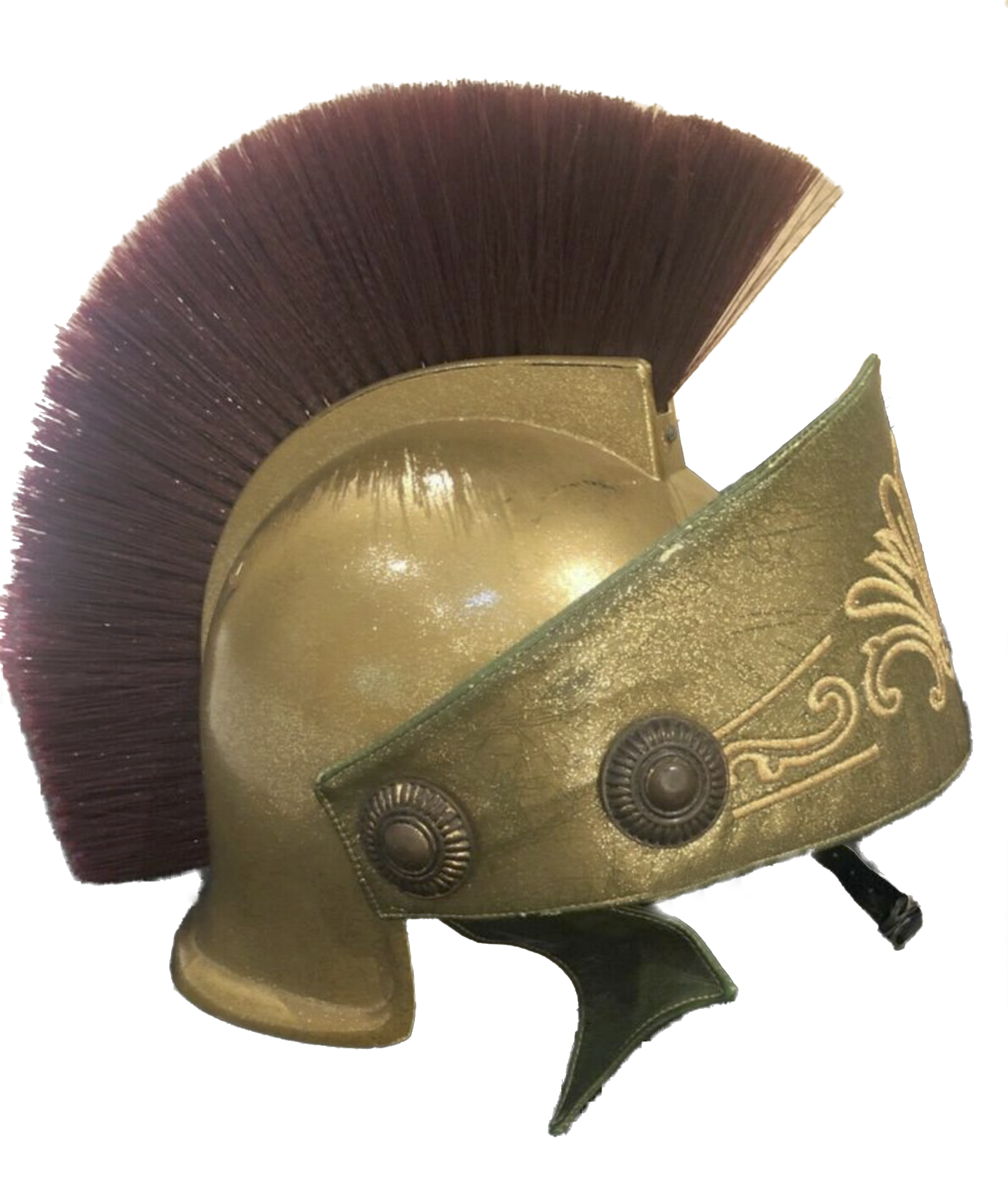
Thankfully, our ersatz Bronze Age armor, with our own cloaks and feather-crested hardhats, was consigned to checked baggage with the bigger instruments. The band’s clarinet section had already been filled, so because I had also taken up the saxophone at USC under the tutelage of virtuoso Harvey Pittel, I carried my alto sax case. The purloined Pentax with its mantle of ruby-red scales hung from my neck. In this milieu, I spied a man I knew only by reputation walk up to a ticketing agent’s kiosk. His name was Leon Russell.
If you weren’t one to read record album liner notes in those days, you’d be forgiven for not knowing who Leon Russell was. But I read them. I’d seen his photo, too. In the music industry, he was branded as the “Master of Space and Time.” Words and pictures aside, his gospel-soul-country-blues-infused piano was all over the radio as a backup player on dozens of other artists’ hits. He was a driving force behind the Wrecking Crew, an informal but vaunted collective of L.A. sidemen, freelance backup musicians contracted for recording sessions. Initially, they were the house band for producer Phil Spector’s “Wall of Sound” recordings. Then, backing up headliners on thousands of studio gigs in the 60s and 70s, from Doris Day to the Beach Boys, they made themselves indispensable to the West Coast music industry. They were rivaled only by the chicken-fried sound of the Swampers in Muscle Shoals, Alabama, who were expeditiously close to recording studios in Memphis and Nashville. (There were the Funk Brothers, too, but they were strictly Motown.)
Leon was also a prolific songwriter. Ray Charles, Willie Nelson, and dozens of other artists covered his tunes. Clearly, his talent supported every kind of popular music style. Rolling Stone cited his influence, calling him a “superstar sideman” without a whit of sarcasm or oxymoron. Most telling is that Elton John cites Leon Russell as his most significant influence.
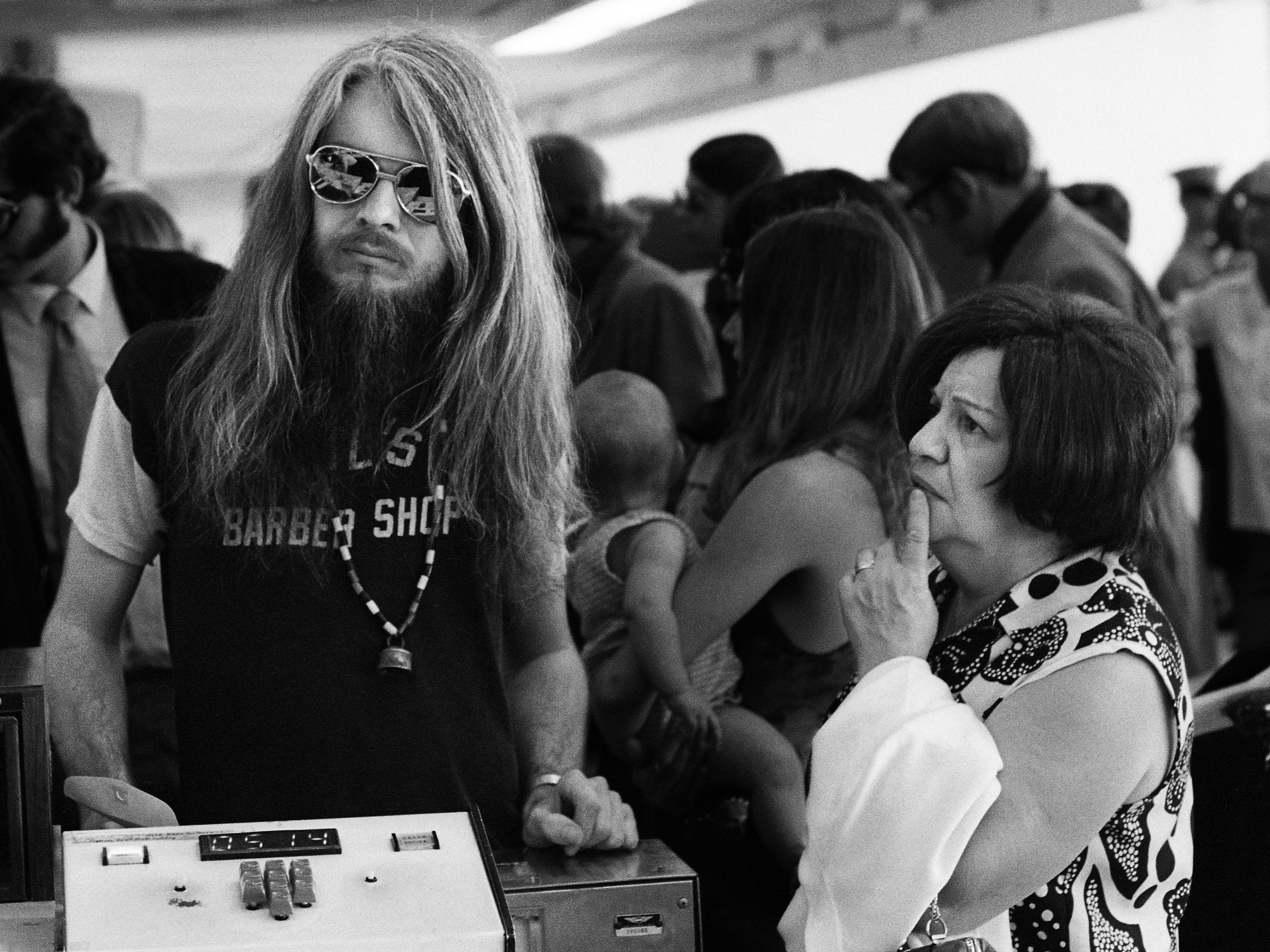
Back at LAX, a pro would’ve shot film first and asked questions later. Instead, holding my camera halfway up to my eye, I shot Leon an inquiring look, which he returned with a nod before I continued. I wound through two frames before I saw the woman sidling into the picture. Then, one more shot: click. She looked like she’d seen one of those gosh-darned hippies for the first time.
Let me remind you that auto-exposure and auto-focus were science fiction in 1969. The success of a photograph, including its being tack sharp and properly exposed, relied on its practitioner’s studied technique and split-second muscle memory, like playing a musical instrument. The clarinet, the saxophone, the camera... all require diligent practicing. I was still a tyro on the camera, so I’ll cop to good luck in capturing a woman’s bewilderment at the sight of a hirsute stranger whose countenance was not the norm in an early Nixon-era airport terminal; people were well-groomed and dressed up to travel. It’s also worth noting that the musical Hair was still in its first run on Broadway, creating media buzz and emphasizing a cultural divide with the buzz-cut crowd.
In my imagination, when looking at this photograph, I see a hand reaching for the woman from out of frame to pull her away and a voice yelling, “Ma! Leave the poor guy alone. You’re embarrassing me.” In fact, she aimed only a word or two at Leon before pussyfooting away as ephemerally as she had approached. I didn’t hear what she said. I don’t know if Leon did, either. What’s more, I still don’t know who she was. Should I have walked over to introduce myself to her or to Leon, ex post photo, if only to rule out that she hadn’t asked for directions to baggage claim? Yes, but I was a chicken-hearted seventeen-year-old, thrilled to be face-to-face with a musical hero. He gave me a nod! At least I had the presence of mind (and the luck) to make a memorable photograph.
I wonder how many people remember that Leon Russell and Elton John released, within months of each other in 1970, two songs that would help define their early solo careers: Leon’s “A Song for You” and Elton’s “Your Song.” But Leon’s ascent was, for a time, the more dramatic. His stature rose even higher when Joe Cocker’s Mad Dogs & Englishmen tour—eat some rock ’n’ roll, Noël Coward!—hit the road that year. Cocker was the headliner, but Leon, as musical ringmaster of this sprawling ensemble, emerged as a star in his own right.
Joe Cocker made a living fitting gas pipes in Sheffield, England, before his screaming-hot cover of the Beatles’ “With a Little Help from My Friends” elbowed nine other songs down a notch on the Top Ten. Sandpapered the erstwhile Number One clean off is more like it. His voice added an abrasive 40-grit to covers of Traffic’s “Feelin’ Alright,” the Band’s “The Weight,” and the Box Tops’ “The Letter,” capped off with a rousing rendition of Leon’s own “Delta Lady.” Cocker’s astounding 1969 debut at Woodstock had catapulted him to rockstar status. Now, he was committed to his first big American tour, but had no backup band. The musicians he fronted at Woodstock called the Grease Band had split up. So Leon got the call to muster the Wrecking Crew.
